BRAND STORY
Noodles that walked a long road
Two thousand years ago, a city stood on the banks of the Yellow River: Jincheng, the Golden City. Caravans crossed the river here heading west, carrying silk to Rome; pepper, cassia and tsaoko came back along the same road and fell into Jincheng's soup pots.
A whole world sits in one bowl. Wheat was domesticated in West Asia some ten thousand years ago and reached the Hexi Corridor in Gansu about four thousand years ago — the oldest wheat found in China; the ancient character 來, "to come", is a drawing of a wheat plant. Flour, and with it noodles, came only when stone mills spread after the Warring States period. Chilli is far younger: it arrived by sea under the Ming and was written down in 1591 as "foreign pepper", so the red chilli oil — the bowl's "three: red" — is its youngest colour, just two or three hundred years old. Sichuan pepper, by contrast, is native to China. Luxuries make culture; necessities make civilisation — and wheat runs deeper than silk.
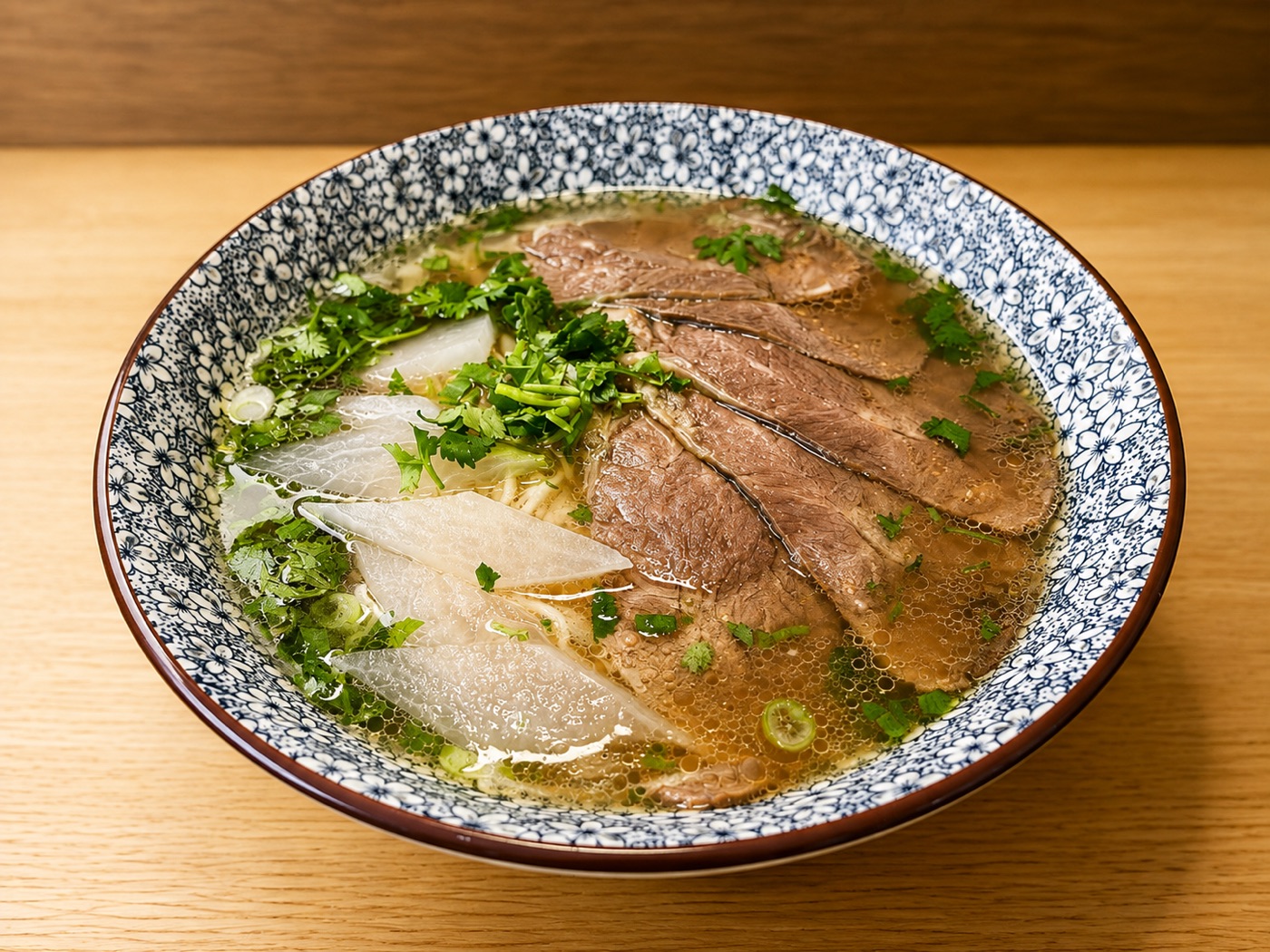
A little over a century ago, that soup was given a standard: one clear, two white, three red, four green, five yellow. A bowl of noodles gained its name — Lanzhou lamian.
A hundred years ago, lamian travelled east. In Japan it came to be called ramen — the very sound of "la mian". Abroad, it grew into another shape.
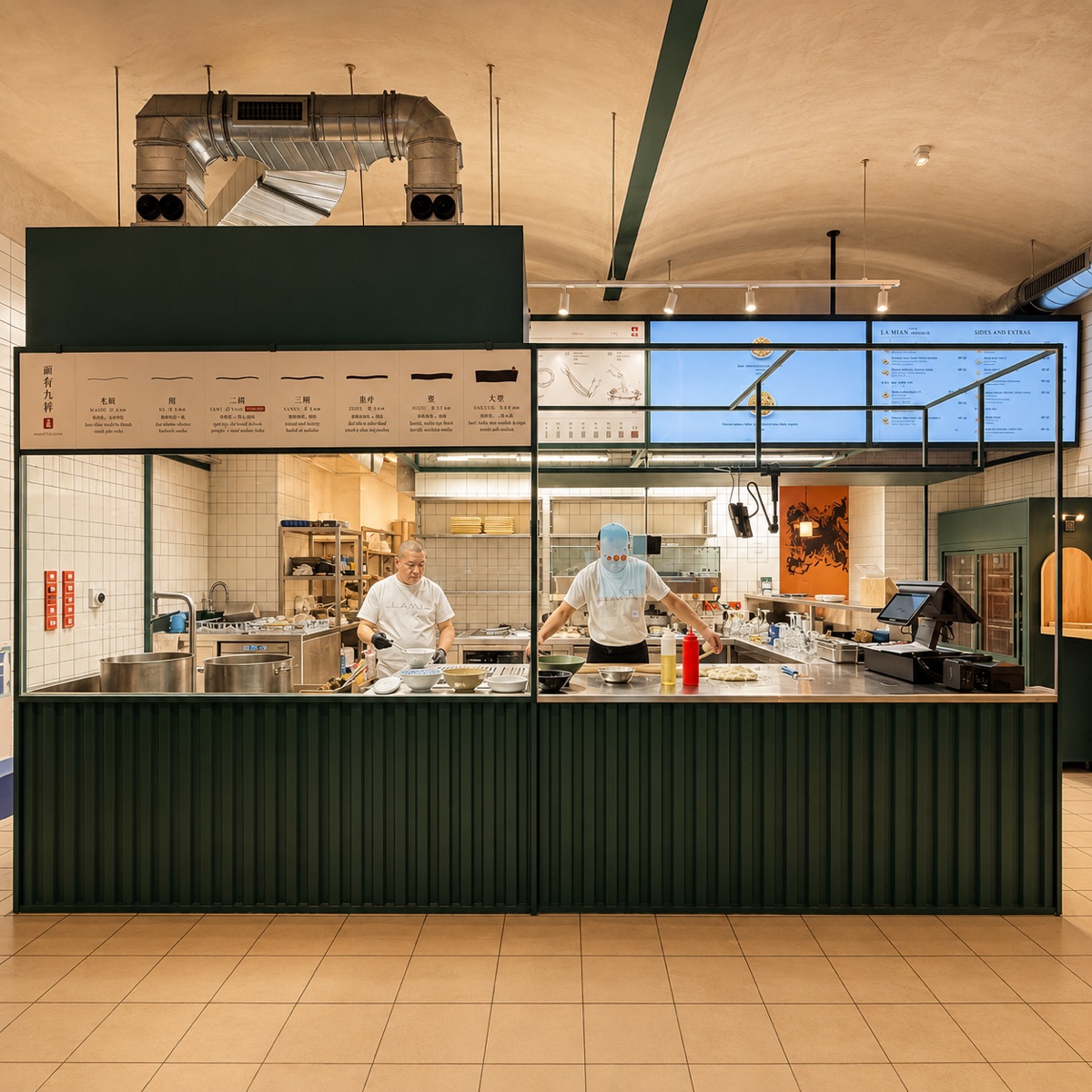
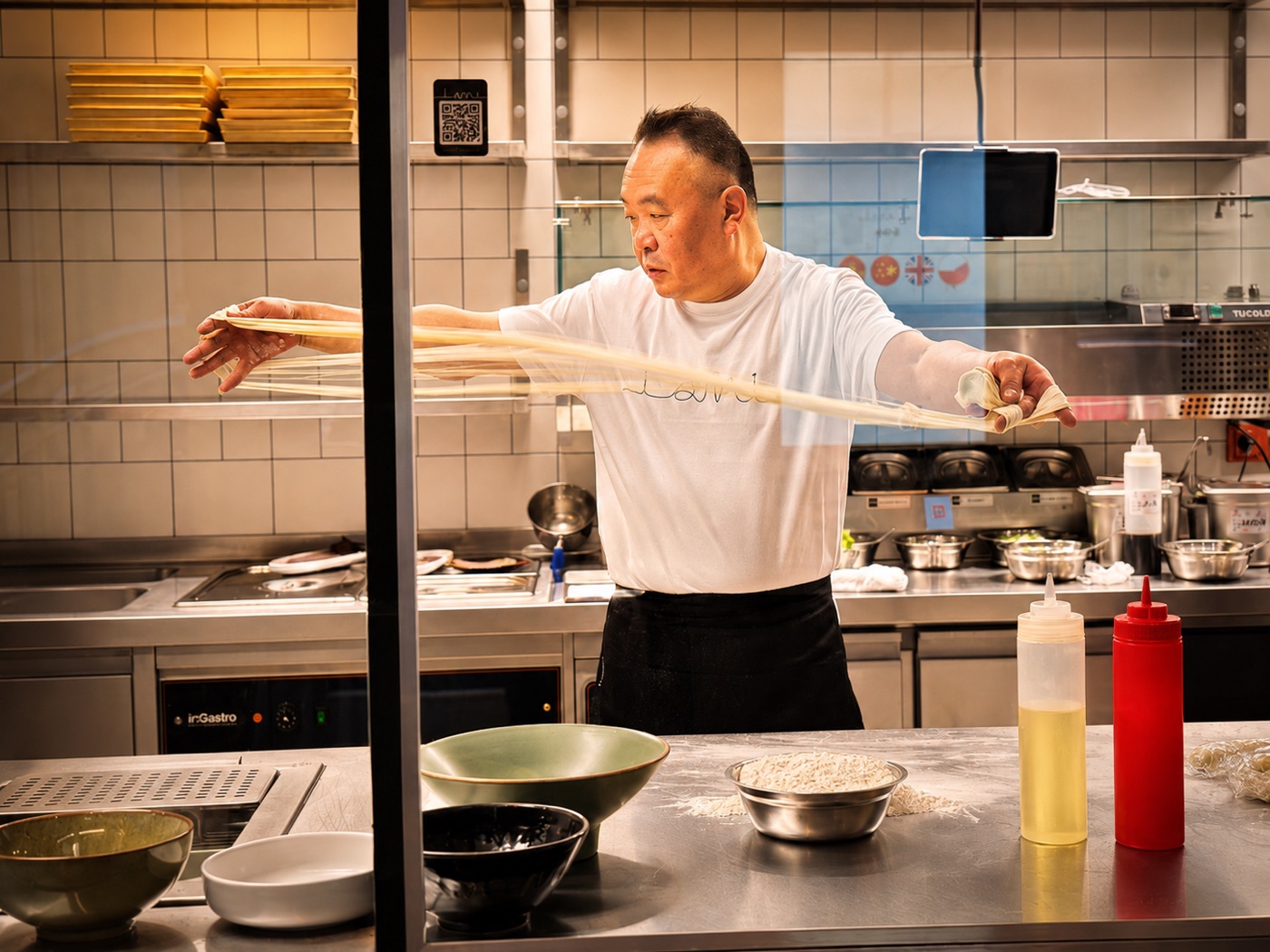
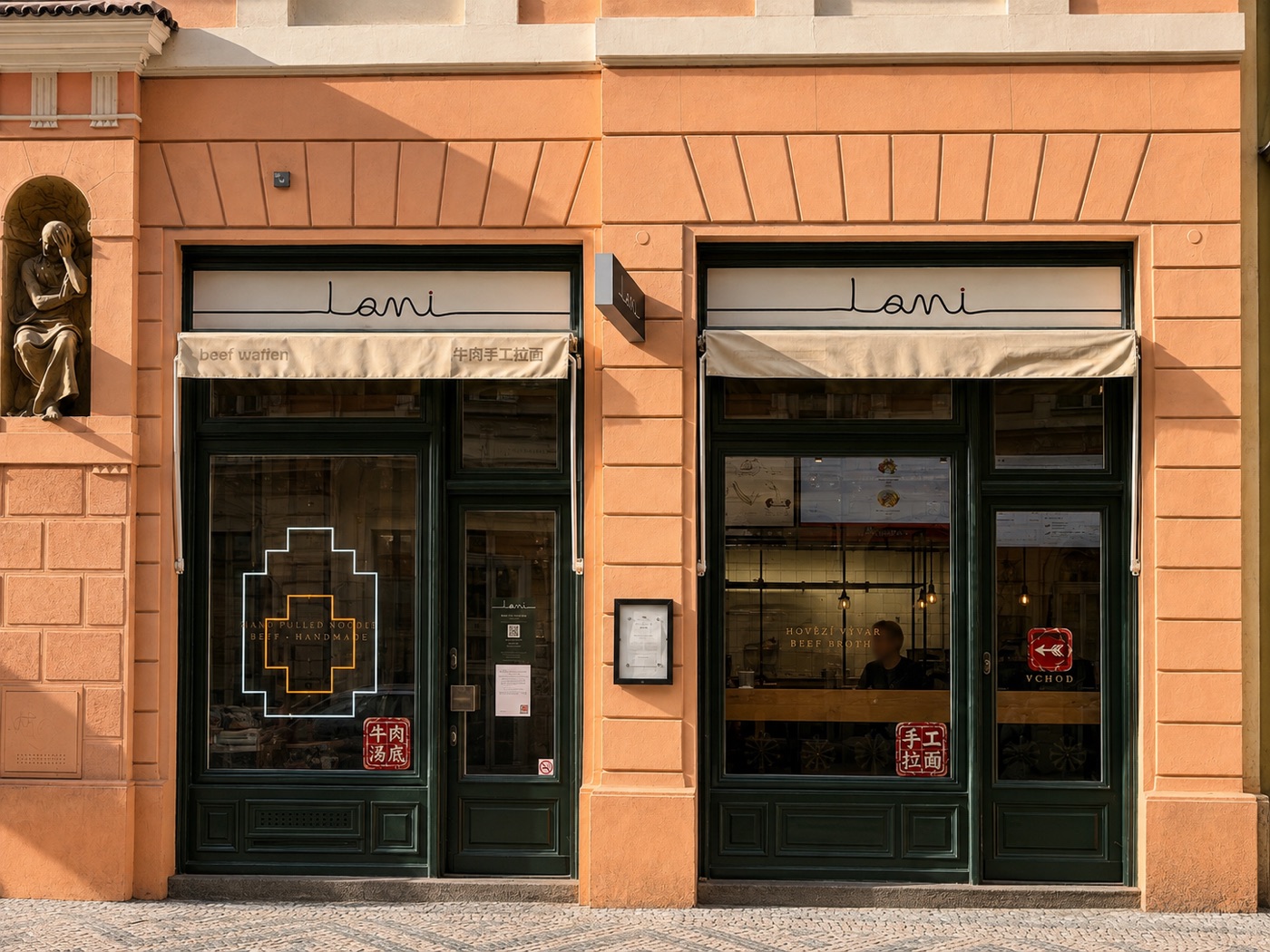
Today in Prague, in a shop that once served Japanese ramen, we set the pot back on the fire. We are not changing the bowl — we are letting ramen return to lamian, letting the noodles come home. Lami — the name of the noodles, and the name of the road.